 Maria Arpa
This week…
Bringing Death Back Home
With..
Rachel Clara Reed
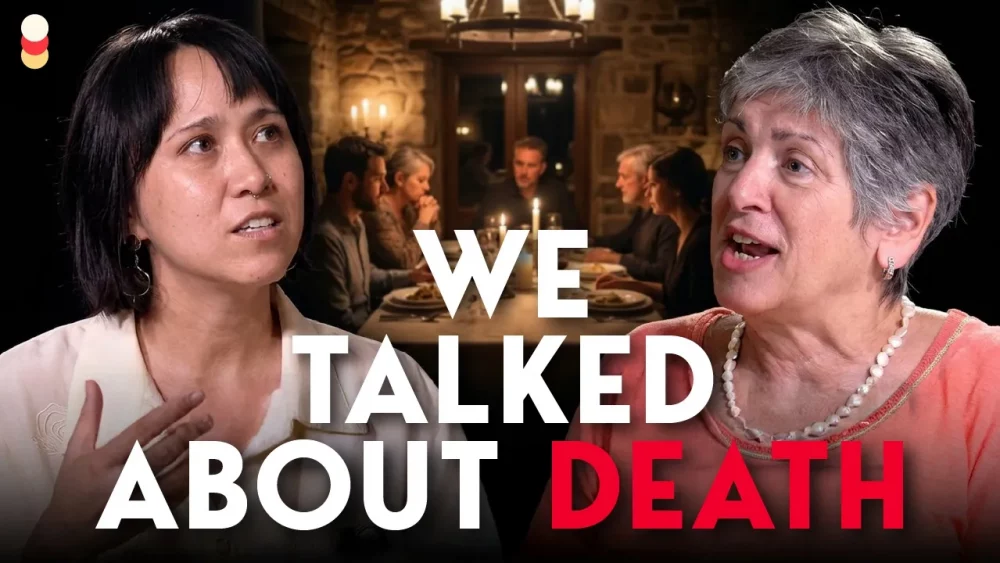
There are some conversations that stay with you long after the microphones are switched off. My conversation with Rachel Clara Reed was one of them.
Rachel is an independent documentary filmmaker turned accredited death doula and dialogue facilitator, and her journey into this work began in the most heartbreaking way. When she was just 18, her father died suddenly and in isolation. In the years that followed, she found herself carrying not only grief, but also the crushing silence that our culture so often wraps around death. For nearly a decade, there was little space to speak about what had happened, let alone process it.
Listening to Rachel reminded me how deeply our society has disconnected us from one of the few experiences every human being shares.
The Two Transitions We’ve Handed Over
Birth and death are the two most natural transitions in human life. Yet, over the past century, both have been steadily institutionalised and medicalised. We have been conditioned to believe that these profound moments belong in the hands of professionals and corporations, rather than families and communities.
Somewhere along the way, we surrendered our confidence in our own ability to care for one another.
Rachel and I explored what happens when we reclaim that confidence. The conversation quickly became about much more than death itself. It became about agency, community and justice.
If we are willing to question who controls our final moments, perhaps we’re also willing to question who controls so many other aspects of our lives.
What Happens When We Finally Talk About Death?
One of the most inspiring parts of Rachel’s work is her Death Dinners.
She has now facilitated conversations with more than 200 people, bringing strangers together around a table to talk openly about mortality. Most people imagine these gatherings must be sombre or overwhelming.
The opposite is often true.
Rachel described something remarkable: once people are finally given permission to tell the stories they’ve been carrying, sometimes for years, sometimes for decades, the room changes. The tension dissolves. People laugh. They cry. They breathe more deeply. There is joy alongside sadness, and relief alongside grief.
It is a powerful reminder that silence is often far heavier than truth.
My Mother’s Final Journey
During our conversation, I found myself sharing one of the most personal experiences of my own life.
When my elderly mother died, I made the conscious decision not to hand everything over to a corporate funeral director.
Instead, we chose another path.
We bought an eco-coffin, and for a time it sat quietly in our guest room. We filled it with fresh herbs. We cared for Mum ourselves. When the time came, we drove her to a natural woodland burial site ourselves.
It wasn’t morbid.
It wasn’t frightening.
It was one of the most loving things I’ve ever done.
By slowing everything down and taking responsibility for those final acts of care, we transformed what could have been a transactional process into something deeply human. We honoured her life in a way that felt authentic to our family rather than following a script written by an industry.
That experience changed me forever.
Death Is Part of Life
We often speak about reclaiming power in our workplaces, our politics and our communities. Yet we rarely think about reclaiming our relationship with death.
Perhaps we should.
Because when we reconnect with these ancient rituals of care, we’re doing far more than changing the way someone is buried. We’re rebuilding trust in ourselves and each other. We’re remembering that communities, not institutions, have always been the foundation of human resilience.
Death doesn’t have to be hidden behind closed doors or outsourced to strangers.
It can become another expression of love.
My conversation with Rachel reminded me that justice isn’t only about systems and institutions. Sometimes it’s about recovering the wisdom we’ve forgotten we already possess.
Perhaps it’s time we started talking about death, not because we’re dying, but because we’re alive.
🎧 Listen to this episode if you’re interested in reclaiming our relationship with death and dying, challenging the medicalisation of life’s most natural transitions, and discovering how open conversations, compassionate care, and community-led rituals can transform the way we experience grief, loss and the end of life.
If you like this blog or content please share it with others.