Peaceful Solutions in Prisons
Since 2009, the Centre for Peaceful Solutions has taken the Dialogue Road Map into more than ten prisons, helping over 2,500 people overcome fear, hostility, resentment and anger.
We train people in prison to become Peaceful Solutions Facilitators: trusted peers who support others through confidential one-to-one sessions, mediation and Dialogue Circles. Because they understand prison life from the inside, they are often able to reach people who may be unwilling or unable to engage with more formal services.
Our work helps people manage conflict, build healthier relationships, take responsibility for their choices and find alternatives to violence and self-harm. It also supports family ties, improves wellbeing and strengthens the prison community.
The programme has been recognised by prison governors, offender management teams and members of the House of Lords. Its purpose reaches far beyond the prison gates: by helping people develop the skills and self-awareness to make different choices, we aim to reduce violence, prevent future victims and support safer reintegration into families and communities.
About the Dialogue Road Map (TM)
The Dialogue Road Map™ (DRM) is a practical communication framework created by Maria Arpa MBE, founder and CEO of the Centre for Peaceful Solutions.
It is designed for the conversations that are hardest to have: those affected by resistance, fear, hostility, resentment or anger. Empathy is at the heart of the approach, but the DRM goes beyond listening. It provides a structured and dynamic process for uncovering what matters to each person, identifying what may motivate change and supporting people to turn that understanding into meaningful action.
The Dialogue Road Map helps people to:
-
build trust, respect and rapport
-
engage in collaborative relationships
-
take responsibility for their words, choices and actions
-
make positive contributions to their own lives and the lives of others
-
develop reflection, self-awareness and conscious decision-making
-
move from conflict towards practical and sustainable agreements
The aim is not to decide who is right or wrong, nor to tell people what they should do. It is to ensure that everyone has the opportunity to be heard and understood, creating the conditions in which change can happen through choice rather than coercion.
The DRM can be used wherever relationships need to continue. In prison, where people live and work under pressure and cannot simply walk away from conflict, these skills can be transformative.
A different approach to prison communities
Our work is based on a simple but important principle: people in prison are not problems to be fixed.
We work with the strengths, experience and potential that already exist within the prison community. Prisoners are not simply recipients of a service. They are trained to become facilitators who can support others and contribute to a safer and more connected environment.
Working with prisoners, staff, governors, chaplaincy teams, families and volunteers, we aim to nurture the “inner mediator” in every part of the community. The result is a genuinely peer-led programme in which people who may once have used avoidance, aggression or violence learn how to listen, reflect, communicate and take responsibility.
This approach recognises that resolving an incident is not necessarily the same as resolving the conflict beneath it. Rules and sanctions may temporarily contain behaviour, but they rarely address the fear, grief, anger, shame or isolation driving it. The Dialogue Road Map creates a safe process for exploring what is happening underneath and finding a constructive way forward.
What Peaceful Solutions Facilitators do
Peaceful Solutions Facilitators are people in prison who have undertaken intensive Dialogue Road Map training. They receive regular supervision, continuing development and wellbeing support from the charity and its team of DRM-trained volunteers.
They are not counsellors, prison officers or authority figures. They are peers with specialist communication and facilitation skills. Their role is not to give advice, judge another person or impose an outcome. They manage the process, helping everyone involved to speak honestly, listen carefully and explore what needs to happen next.
Because facilitators experience many of the same pressures, frustrations and restrictions as the people they support, they bring an understanding that cannot easily be taught from outside. This can help them establish trust with prisoners who might otherwise remain isolated or reluctant to ask for help.
Working in pairs wherever possible, facilitators offer:
Confidential one-to-one sessions
These give prisoners a safe and confidential space to talk about anything troubling them. Facilitators help the person explore what is happening, understand their feelings and reactions, and consider the choices available to them.
Self-reflection work
A structured self-reflection pack enables a prisoner to work through personal issues with support from trained facilitators. It encourages greater self-awareness, responsibility and understanding of recurring patterns.
Mediation
When two people are experiencing conflict, facilitators provide a structured meeting in which each person can be heard. The purpose is to uncover the underlying issues and help the participants find their own workable resolution.
Dialogue Circles
Dialogue Circles bring groups together to explore concerns affecting a wing or community. They can also address grief, loneliness, isolation, wellbeing and relationships, helping participants develop a greater sense of connection and shared responsibility.
A session may resolve the matter without further intervention, lead to additional one-to-one support, or result in an invitation to mediation or a Dialogue Circle. Where an issue affects a wider group, the process may help the community develop a shared request, agreement or resolution.
The impact of Peer Facilitation
Our facilitators support people who may be struggling with anger, conflict, fear, grief, loneliness or isolation. They help to resolve disputes before they escalate, strengthen relationships on the wings and make it easier for prisoners to seek help.
The impact is felt not only by those receiving support, but also by the facilitators themselves. They develop communication, leadership, reflection and conflict-resolution skills while undertaking a meaningful role within their community.
In 2019, a team of 24 DRM-trained facilitators supported more than 360 prisoners, during a period in which the prison also experienced a reduction in violence.
The Centre for Peaceful Solutions continues to support facilitators as they move to open conditions, leave prison and rebuild their lives in the community. To date, none of the Peaceful Solutions Facilitators we have supported after release has returned to prison.
Supporting change beyond the Prison gates
Our intention is not simply to contain conflict while someone is in prison. It is to support a deeper change that can travel with them when they leave.
People who learn how to recognise their reactions, express themselves without aggression, listen to others and take responsibility for their choices carry those abilities into their relationships with partners, children, families, colleagues and communities.
By creating change on the inside, we aim to reduce violence outside, strengthen families and prevent future victims. That is why this work matters not only to prisons, but to all of us.
Some of our Facilitators now work for the charity, some volunteer and some continue to receive support or simply stay in touch.
From Dartmoor to Portland
Following extensive planning and a fundraising event in 2016, support from individual donors, the Allen Lane Foundation and the Tedworth Trust enabled us to establish a pioneering project at HMP Dartmoor.
Working in partnership with the governor, managing chaplain and senior management team, we set out to demonstrate what could happen when a prison community was given the skills and support to approach conflict differently.
Over eight years, the project showed how the Dialogue Road Map could contribute to reducing conflict and violence, improving wellbeing, strengthening relationships and developing greater self-responsibility and accountability. It was particularly effective within the complex hierarchy of a prison, where many different stakeholders were operating under intense pressure and with limited resources.
After Covid the 2022 cohort of Dartmoor facilitators had received two years of intensive training and supervision from Maria Arpa MBE, David Ellis and Louisa Burnand, supported by a team of DRM-trained volunteers.
Working in pairs, the prisoner facilitators maintained approximately nine one-to-one sessions each week. Beneficiaries usually received at least six sessions. The facilitators also ran their own wellbeing meetings and project-management structure, making the programme genuinely peer-led.
Changes to resettlement arrangements, pressure from the rising prison population and the discovery of unsafe radon levels eventually led to the Dartmoor team being dispersed across the prison estate. HMP Dartmoor subsequently closed.
During this period, we were invited by the governor of HMP Portland to introduce the Peaceful Solutions Dialogue Road Map programme there.
Quick Facts
-
Undertaken an audit of communications and conflict within the prison, to use as a baseline against which to measure progress
-
Trained 6 cohorts of 8 prisoners as DRM Facilitators
-
Placed a prisoner facilitator to assist with Inductions
-
Piloted a prisoner-family mediation project, helping to build relationships between prisoners and their families and resolve disputes
-
Reached over 500 struggling prisoners with one to one support
-
Currently offering 90 sessions a month to struggling prisoners
-
Facilitators gave up their one hour unlock throughout Covid restrictions to support desperate prisoners
-
Trained 20 Prison staff to understand the project and support the Facilitators, creating more awareness
-
Introduced a bespoke Self Reflection pack so that prisoners who are stuck can transform their beliefs and attitudes and progress through their sentence plans with authenticity.
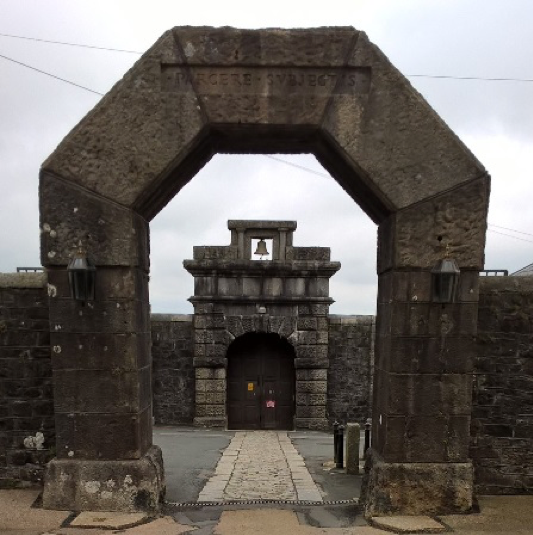
Bringing DRM to the Verne – 2026
We are delighted to announce that we have just trained a new cohort at The Verne. As we embark on a new project with another group of Facilitators, we are committed to support this new project as it takes root in the prison
Our work at HMP Portland 2025 – 2026
Following the early impact of our newly trained facilitators at HMP Portland, a further cohort of 12 facilitators was trained in January 2025.
Alongside undertaking their own intensive reflective work, the new facilitators began establishing the service across the prison. Between March 2025 and January 2026, the DRM team delivered an average of 15 one-to-one sessions, three mediations and three Dialogue Circles each month, reaching more than 200 beneficiaries.
Changes to release dates meant that several trained facilitators progressed to open conditions earlier than expected. While this was positive for those individuals, it created a need to train and develop another cohort so that the peer-led service could continue.
In January 2026, five new facilitators were trained, bringing the active team to eight. Since then, the team has delivered a further 30 facilitated healing sessions, five informal peer mediations and a number of Dialogue Circles with young prisoners addressing grief, loneliness and isolation.
Nine Dialogue Road Map-trained volunteers now support the project, providing supervision, encouragement and wellbeing support to the facilitators. We also continue to support former facilitators as they move into open conditions and return to the community on licence.
2024
In 2024, our team of Facilitators hit peak performance having received intensive training and supervision over two years from Maria Arpa MBE, David Ellis and Louisa Burnand and supported by our DRM trained volunteers. Working in pairs, the Prisoner Facilitators were maintaining 9 one to one sessions per week with beneficiaries receiving at least six sessions as well as running their own wellbeing sessions and project management structure to be a truly peer led programme.
With the rise in the prison population forcing changes to resettlement, and the discovery of unsafe levels of Radon Gas, our team has been dispersed across the prison estate and ultimately Dartmoor prison had to close.
In the meantime, we were delighted to be invited by the Governor at Portland Prison to bring the Peaceful Solutions Dialogue Road Map (DRM) programme to the prison.
2023
With 4 members of the Senior Management Team offering to take responsibility for the project additional to their responsibilities, the new Governor agreed to rebuild the project.
In May 2023 we have trained 7 Facilitators to join the remaining 2.
The Team of 9 dedicated themselves supporting prisoners who are struggling. This could be because of conflict, substance misuse, debt, mental health issues or family problems. They helped prisoners to get to the core of their issues in confidence and monitor progress over six one to one sessions. These
sessions may result in more sessions, talking to prison officials or support getting a referral for professional help. Working at this core level has reduced the number of mediations needed to almost none.
Currently the Facilitators are undergoing the Self Reflection pack in order to better understand themselves and know what it is like to go through before making it available to specific prisoners who need more intense help.
2020 – 2022 Covid Group
The prison went into lockdown with 23 hour lock up for all prisoners and 24 hour lock up for those testing positive for Covid.
Over these two years we were unable to visit the prison and the project began to disintegrate. Facilitators were moving on to open prisons or being released and at our worst point we had 2 men left who were managing their own person issues such as a death in the family.
To make matters worse the Governor who had made this project work took early retirement.
Even so, the dwindling Facilitators were dedicated and would give up their one hour unlocked to support someone who was desperate or suicidal knowing how some prisoners were not coping.
2019
The team has grown to 25 Facilitators. We are experiencing the usual tensions in a large group stemming from the workload and the new need to organise better. The men are working out systems for organising so that they can operate more efficiently.
They created small committees for Team Wellbeing, Rota Management, Facilities and Venue preparation, Casework meetings, Outreach to Prison Council and other groups and Practice Groups.
They elect a Chair person every quarter to run the group meetings.
2018
The DRM project at Dartmoor Prison has now taken root and we have a solid direction. We now have a small cohort of prisoners trained as DRM Facilitators who work full time on prison pay and take regular supervision and ongoing training.
The group is supported by a small team of trained prison officers. We are in the process of creating a DRM wing as an enabling environment for prisoners with complex issues who have reached out for help. This work is in process as we begin transitioning the wing.
Over 4 days we conducted a number of open circles with prisoners, officers and staff from supporting organisations to introduce the DRM as a way of transforming prison communication.
Prisoners were convinced that these principles would help prisoners who struggle and were keen to support the project. Officers were divided in their response with the majority supporting the project but some were change averse which means there is more transformational work to do. We have a number of officers interested in becoming DRM trained to take on the running of the wing using restorative practice and DRM circles. So huge progress is being made.
The DRM has been recognised in the Prison’s Inspection Report and in a recent audit on violence and self harm.
Plymouth University have conducted scoping research and will be seeking funding for a full academic research project. The Governor and Senior Management Team are making changes necessary to facilitate the project. Our future plans are to train all members of the prison community in the Dialogue Road Map, to build a team of 50 DRM Facilitators – both prisoners and prison staff and to leave a legacy in the prison so they can self train on an ‘each one teach one’ basis. To enable these plans to come to life, we urgently require more funding, something of a challenge in a sector in which competition for scarce resources is increasingly intense. We invite you to become part of our journey for change by donating what you can, or putting us in touch with Trusts, Foundations, or donors who may be interested in supporting this cause.
We’re always happy to meet over a cup of tea, so if you’re interested in learning more about our Dartmoor journey or becoming a supporter, please get in touch.
2017
In August 2017, the prison was inspected and the inspection report – published in December 2017 – ‘makes a number of positive references to how our work is starting to create change within HMP Dartmoor:
“Some innovative conflict resolution strategies were being embedded. Some staff and prisoners were trained in “dialogue road mapping”, a new tool developed by the Centre for Peaceful Solutions to encourage non-violent communication. They could be called on to mediate in disputes. The well-publicised initiative was explained to men on their induction.”
“The new and innovative ‘dialogue road mapping’ initiative and use of mediation supported men in resolving disputes and tensions without using violence.”
“The chaplaincy offered very good pastoral support. The team was involved in the induction process, spending every Monday morning with new arrivals to discuss their attitudes to the integrated regime and highlight interventions like the dialogue road map, a form of mediation, which the new managing chaplain had helped to introduce.”
“There were several initiatives to support family contact, including family conferencing (a mediated formal meeting to promote dialogue and understanding).”
All funds donated here will be restricted to our prison and Life after Prison projects.