 Maria Arpa
This week…
The Human Cost of IPP Sentences
With..
Andrew Morris
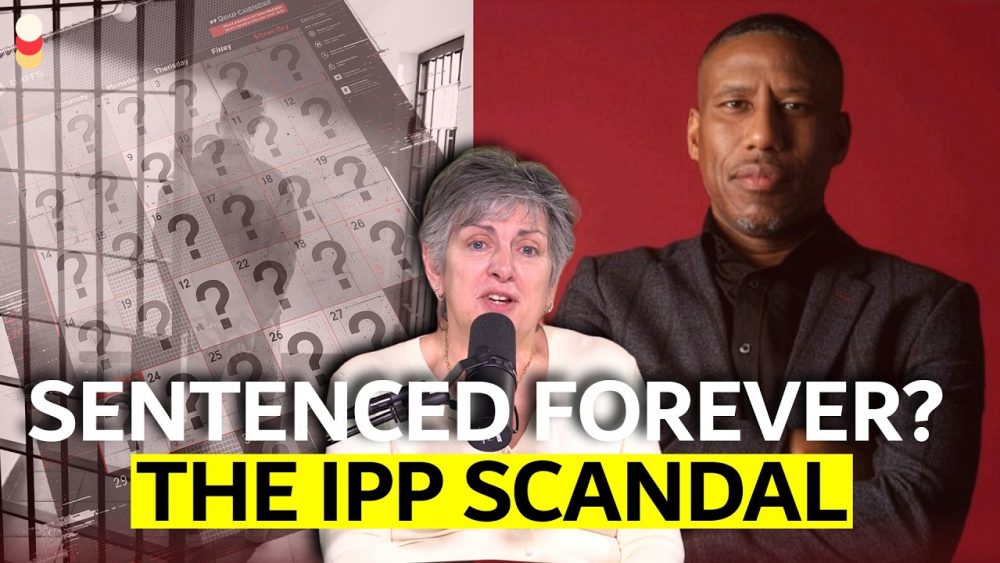
In this episode of All Things Conflict, I sit down with Andrew Morris, a powerful voice for those still living under the shadow of the IPP (Imprisonment for Public Protection) sentence, to share his experiences and insights into this ongoing crisis.
Often described as “the sentence with no end,” IPP has left thousands of people trapped in the British prison system years, sometimes decades, beyond their original minimum tariff. Though abolished in 2012, the decision was not made retrospective, leaving many still caught in a system widely acknowledged as flawed.
This episode goes beyond policy. It confronts the human cost.
The Sentence With No End
Introduced in 2005, IPP sentences gave prisoners no fixed release date. Instead, individuals had to prove to the Parole Board that they were no longer a risk to the public, a threshold many describe as unclear, inconsistent, and almost impossible to meet.
For some, a tariff of two or three years has stretched into ten or more. Today, around 2,700 people remain either in custody or living under strict licence conditions.
Andrew speaks from lived experience about what that uncertainty does to a person.
The Psychological Toll
Imagine serving your minimum term, and then waiting indefinitely. No release date. No clear roadmap. Limited access to the very courses required to demonstrate rehabilitation.
Andrew describes the experience as psychological “torture.” The constant uncertainty erodes hope. Time loses structure. Mental health deteriorates.
Self-harm and suicide rates among the IPP population have been consistently higher than among the wider prison population. The sentence does not simply confine; it destabilises.
A System That Keeps People Stuck
We examine the systemic failures that perpetuate the crisis: long delays between parole hearings, limited availability of rehabilitative programmes, and a recall system that can send individuals back to prison for minor breaches.
Even those who secure release remain on licence indefinitely, living with the constant risk of recall. Freedom, in these circumstances, can feel conditional and fragile.
The result is a cycle of despair, one that extends punishment far beyond the original intent of the court.
Abolished, But Not Ended
In 2012, the government abolished IPP sentences, acknowledging widespread criticism. Yet those already serving IPP were left behind.
If a sentence is unjust enough to end, what does it mean to continue imposing it on thousands of people?
This question sits at the heart of the conversation.
Justice, Redesigned
This episode is not only a critique of a broken system, it is a call to reimagine justice itself.
What would accountability look like if it were rooted in rehabilitation rather than indefinite containment?
How do we protect the public without creating psychological harm?
What responsibility does the system hold for those it has left in limbo?
Andrew Morris brings clarity, courage, and urgency to these questions. His story is deeply personal, but it reflects a national issue that remains unresolved.
Because justice without an end date is not justice at all.
🎧To understand the human impact behind the headlines, listen to this episode, where Andrew reveals the lived reality of the IPP sentence and the urgent need for reform.
If you like this blog or content please share it with others.