 Maria Arpa
This week…
Why We Love to Punish
With..
Robin Shohet
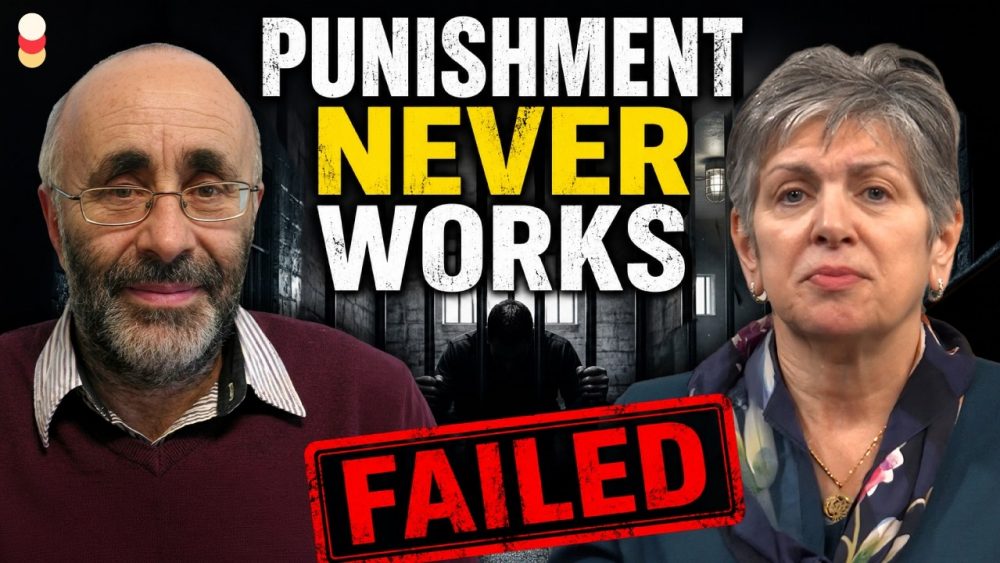
In this episode of All Things Conflict, I sat down with Robin Shohet to explore why punishment remains so deeply embedded in our courts, workplaces, schools, and relationships despite centuries of evidence showing its limitations. Together, we examined why punitive thinking continues to dominate our institutions, what restorative justice offers as an alternative, and why genuine human connection may be the missing ingredient in creating accountability and lasting transformation.
Why We Remain Attached to Punishment
One of the central themes of our discussion was the persistence of punishment despite overwhelming evidence of its limitations.
Punishment often fulfils an emotional need. It can provide a sense of certainty, order, and reassurance when harm has occurred. It allows us to feel that justice has been done.
But feeling satisfied and creating change are not the same thing.
As Robin observed, our commitment to punishment may tell us more about our psychological need for control and certainty than about effective responses to conflict.
A Justice System That Limits Human Connection
We explored a striking paradox within the criminal justice system.
The factors most closely associated with reducing reoffending include accountability, empathy, understanding, and meaningful human connection. Yet many criminal justice processes are structured to keep people apart rather than bring them into dialogue.
Victims, offenders, professionals, and communities often remain disconnected from one another throughout the process.
The result is a system that can punish behaviour without addressing the underlying conditions that gave rise to it.
What Restorative Justice Does Differently
Restorative justice starts from a fundamentally different place.
Instead of asking, “What rule was broken and how should we punish the person responsible?”, it asks:
- Who has been harmed?
- What impact has that harm had?
- What needs to happen to repair the damage?
- Who has responsibility for making things right?
This approach focuses on accountability through understanding and repair rather than fear and exclusion.
As Robin and I discussed, restorative practices consistently achieve stronger outcomes for victims, offenders, and communities than punitive approaches alone.
The Hidden Cost of Adversarial Systems
Our conversation also touched on the people working inside these systems.
Whether they are lawyers, GPs, prison staff, social workers, managers, or HR professionals, many find themselves operating within structures that reward opposition rather than connection.
Over time, this can lead to stress, burnout, and a loss of the empathy that originally drew them to their profession.
The system does not only affect those who come into conflict with it; it affects those tasked with administering it as well.
The Problem with Needing to Be Right
One of the most thought-provoking parts of our discussion centred on the human need to be right.
In conflicts of every kind, the desire to prove ourselves correct can become more important than understanding one another.
When winning becomes the objective, curiosity disappears. Listening stops. Relationships suffer.
Whether in organisations, families, or public life, the need to be right often stands in the way of meaningful connection and lasting resolution.
From Hunter-Gatherers to Punitive Societies
Robin also offered a fascinating perspective on how punitive thinking may have developed over time.
As societies moved from small hunter-gatherer communities to larger, property-owning cultures, ideas about ownership, control, and social order became increasingly important. Many of the systems we take for granted today emerged from these shifts.
Understanding this history reminds us that punishment is not inevitable. It is a social construct that has evolved over time and can evolve again.
Retaliation Versus Accountability
For leaders, managers, and HR professionals in particular, there is an important distinction between retaliation and accountability.
Retaliation seeks to strike back.
Accountability seeks to create learning, responsibility, and change.
Too often, organisations mistake one for the other. When conflict arises, the focus quickly shifts to identifying who is at fault rather than understanding what has happened and what needs to be repaired.
If our goal is healthier workplaces and stronger relationships, we need responses that move beyond blame and towards genuine accountability.
Looking Beyond Punishment
As our conversation drew to a close, we returned to a simple but powerful question:
When harm occurs, do we want punishment, or do we want change?
If our goal is to reduce harm, strengthen communities, and create genuine accountability, we may need to rethink some of our most deeply held assumptions about justice itself.
My conversation with Robin Shohet was a thought-provoking exploration of why punishment continues to dominate our thinking and what becomes possible when we replace blame with connection, curiosity, and accountability.
🎧 Listen to this episode if you’ve ever found yourself asking whether punishment actually works, or if you care about restorative justice, human connection, and building healthier responses to conflict.
If you like this blog or content please share it with others.