 Maria Arpa
This week…
When Systems Stop Listening
With..
Maria Arpa
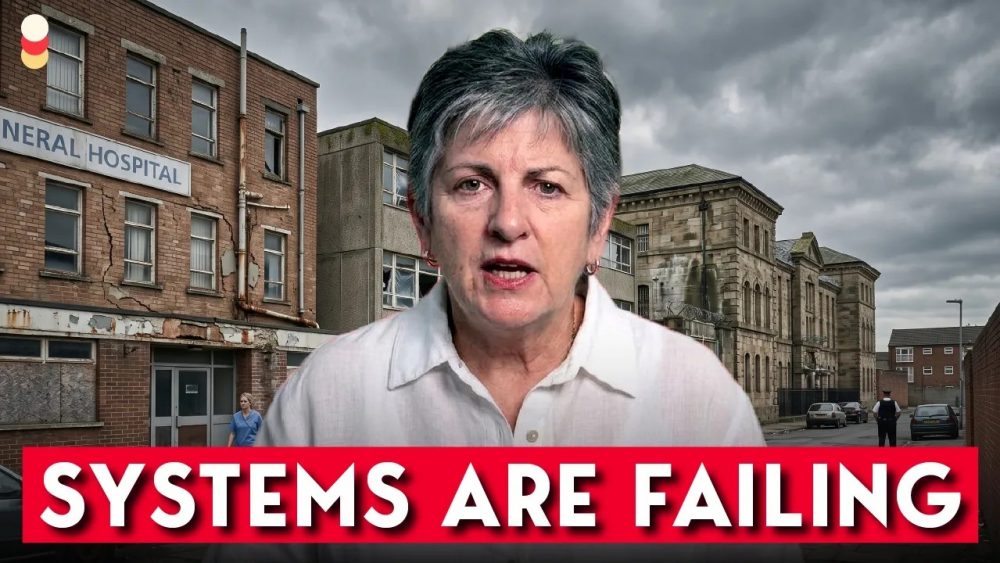
What happens when the systems designed to care for us stop listening to the people they are supposed to serve?
This is the question I explore in this solo episode of All Things Conflict.
Across the NHS, schools, prisons, job centres and workplaces, I see the same troubling pattern emerging. Complaints are rising. Frontline workers are burning out. Trust in institutions is being eroded.
And yet, I don’t believe the people working inside these systems are necessarily the problem.
Increasingly, I believe they are trapped inside systems that have lost touch with their original purpose.
The Delivery Gap
One of the biggest problems I see is what I call the delivery gap: the growing distance between the people who design policies and the people who have to deliver them.
Policies are often created by senior leaders, committees and consultants who are trying, in good faith, to improve services, manage risk or create consistency.
But something happens as those policies move down through layers of management and administration.
The human purpose can get lost.
By the time a policy reaches a nurse, teacher, prison officer, civil servant or job-centre worker, the question can become less about:
“What does this person actually need?”
and more about:
“Have you followed the process?”
That shift matters enormously.
Because when compliance becomes more important than human judgement, the system starts to work for itself rather than for the people it was created to serve.
When Box Ticking Becomes Survival
I see frontline workers caught in what I call the box-ticking trap.
Complete the form. Record the interaction. Meet the target. Follow the procedure. Demonstrate compliance.
And, above all, don’t make a mistake.
For people who entered their professions because they wanted to help others, this can be deeply demoralising.
Instead of being supported to use their experience, judgement and humanity, they can find themselves spending enormous amounts of energy protecting themselves from organisational consequences.
The safest thing to do becomes following the process exactly, even when they know that the person standing in front of them needs something different.
This isn’t simply an employee wellbeing issue.
It can directly affect the quality of care and service people receive.
What the Windrush and Post Office Scandals Can Teach Us
We don’t have to look far for examples of what happens when institutions stop listening.
The Windrush scandal and the Post Office Horizon scandal both demonstrate, in very different ways, what can happen when bureaucratic systems become disconnected from human experience.
People were raising concerns. Individuals were experiencing things that didn’t fit the official narrative. Yet the systems struggled, or failed, to respond appropriately.
The lesson for me is not simply that individual decisions were wrong.
It is that systems can become incapable of hearing information that contradicts their own assumptions.
And once that happens, the people raising the alarm can themselves become labelled as the problem.
That’s when institutional blindness becomes particularly dangerous.
When Management Becomes Disconnected From Reality
Another issue I explore is the growing distance between decision-makers and frontline reality.
Senior teams may be looking at dashboards, spreadsheets, targets and performance indicators.
Meanwhile, somewhere else in the organisation, a nurse is dealing with an exhausted patient. A teacher is trying to support a distressed child. A public servant is dealing with someone in crisis.
Both are looking at the same organisation.
But they are experiencing completely different realities.
When management relies too heavily on data without creating meaningful opportunities for dialogue, the numbers can become more important than the people behind them.
A complaint becomes a statistic.
Burnout becomes an HR problem.
A warning becomes a performance issue.
And the organisation can miss what is actually being communicated.
Conflict Is Information
This brings me to something I feel very strongly about:
Conflict is often an early warning system.
A complaint isn’t necessarily an attack.
Resistance isn’t necessarily something to suppress.
A difficult conversation isn’t necessarily a management failure.
Sometimes conflict is information.
It can tell us that a policy isn’t working as intended. It can reveal where a process is creating unintended harm. It can show us that frontline workers are seeing something senior decision-makers simply cannot see from their position.
The danger comes when organisations treat these signals as threats rather than information.
By the time the warning signs become impossible to ignore, the problem may have escalated into a full-blown crisis.
Bringing Dialogue Back Into Our Institutions
So what can we do differently?
This is where my Dialogue Roadmap comes in.
I believe we need to create spaces for genuine, localised dialogue within our institutions, spaces where the people closest to the work can speak honestly about what they are experiencing and where decision makers are prepared to listen.
That means listening to frontline workers before they burn out.
It means taking complaints seriously before they become scandals.
It means creating meaningful feedback loops between policy and practice.
And it means recognising that the people closest to a problem often have the clearest understanding of what needs to change.
Dialogue isn’t about abandoning accountability or structure.
It is about reconnecting those structures with the human beings they are supposed to serve.
We Need to Start Listening Earlier
I don’t think the biggest challenge facing our public systems is necessarily a lack of policies, procedures or management structures.
In many cases, we have more than enough of those.
What we may be lacking is the ability and willingness to listen.
When an institution becomes so focused on protecting itself that it can no longer hear the people inside it, systemic failure becomes much more likely.
And the warning signs are usually there.
The question is whether we are prepared to listen before those warning signs become another public scandal.
In this episode of All Things Conflict, I explore why our systems can move from caring to controlling, why frontline workers become trapped in administrative survival, and how we can use dialogue to reconnect institutions with the people they exist to serve.
What if we stopped treating conflict as something to eliminate, and started treating it as information about what our systems need to heal?
That’s the conversation I want to have.
🎙️Listen to the full episode of All Things Conflict and join me in exploring how human-centred dialogue can help our institutions start listening again.
If you like this blog or content please share it with others.