 Maria Arpa
This week…
Beyond the Labels
With..
Lee Middleton
Some of the most powerful conversations happen in places where we least expect them.
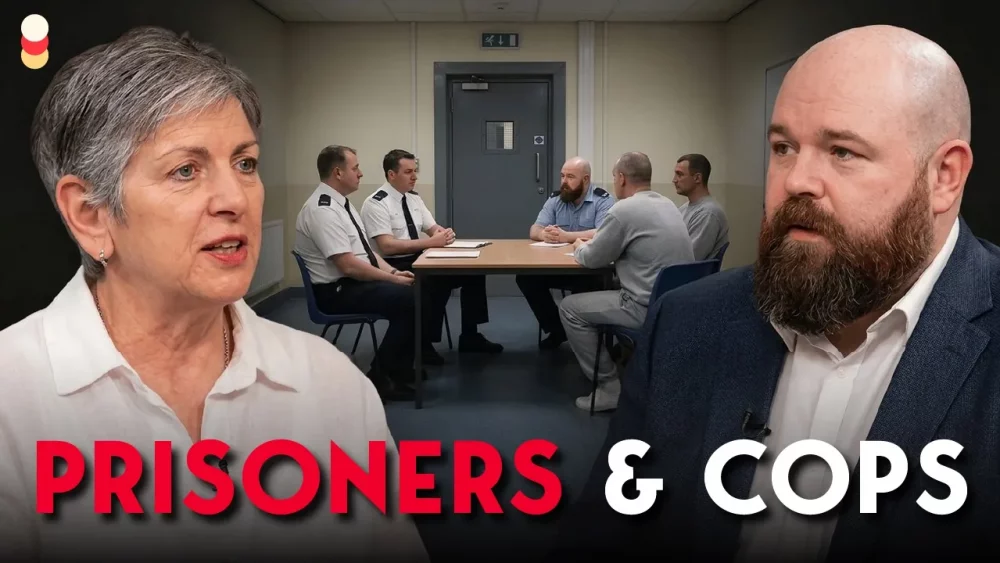
In this episode of All Things Conflict, I’m joined by Lee Middleton, a former prison officer who spent 17 years at HMP Dartmoor. Lee takes us inside a remarkable seven year project that brought prison officers and incarcerated people together in the same classroom, training side by side through the Peaceful Solutions Dialogue Roadmap.
What followed was a powerful lesson in what can happen when we create space for people to listen, understand and see one another beyond the roles they have been given.
When the Uniform Comes Off
Inside prison, labels carry enormous weight.
Officer. Prisoner. Authority. Inmate.
But what happens when people are given the opportunity to meet one another as human beings?
Lee describes how joint training began to break down some of the barriers that had existed between staff and those in custody. Officers and prisoners learned alongside each other, creating opportunities for mutual understanding and a different kind of professional respect.
This was not about removing boundaries or authority. It was about recognising the person behind the role.
The Power of Being Heard
One of the most powerful elements of the project was confidential, peer led one to one listening.
For people living in an environment where trust can be difficult and vulnerability can feel dangerous, having a space where they could speak openly and be heard without judgement was transformative.
The results were significant.
The project saw reductions in wing violence, self harm and bullying, while creating a stronger sense of connection and responsibility across the prison.
Sometimes the first step towards changing behaviour is simply giving someone the opportunity to understand what is happening inside them.
Finding the Language for Conflict
Lee explains how people were given practical tools and language to identify their feelings and needs.
That might sound simple, but being able to say what we are feeling, understand why we are feeling it and recognise what we need can fundamentally change the way we respond to conflict.
Instead of reacting, people can begin to make choices.
Instead of escalating, they can communicate.
Instead of feeling powerless, they can develop a sense of self efficacy.
Listening to Listen
Perhaps the most important lesson Lee took from the experience was one that has stayed with him personally.
Listening to listen rather than listening to respond.
Most of us are preparing our answer while someone else is speaking. We are thinking about what advice to give, how to solve the problem or how to defend our own position.
True listening requires something different.
It asks us to slow down.
To become curious.
To hear what the other person is actually saying.
And to resist the urge to immediately fix it.
Lee explains how this changed not only the way he worked inside the prison, but the way he approached his own life.
Seeing the Person, not the label
There are no easy answers when it comes to prisons, violence or rehabilitation.
But Lee’s experience offers a powerful reminder that human connection can exist even in some of the most challenging environments.
When people are given the tools to understand themselves and each other, something begins to shift.
The labels do not necessarily disappear. The roles still matter. Boundaries still matter.
But alongside them, something else becomes possible.
Respect.
Empathy.
Dialogue.
And perhaps most importantly, hope.
🎙️Listen to the full episode of All Things Conflict and hear Lee’s story for yourself. It is a fascinating conversation about what can happen when we stop seeing people only through the roles they have been given and start listening to the human being in front of us.
If you like this blog or content please share it with others.