 Maria Arpa
This week…
Beyond Punishment
With..
Paul Hamilton
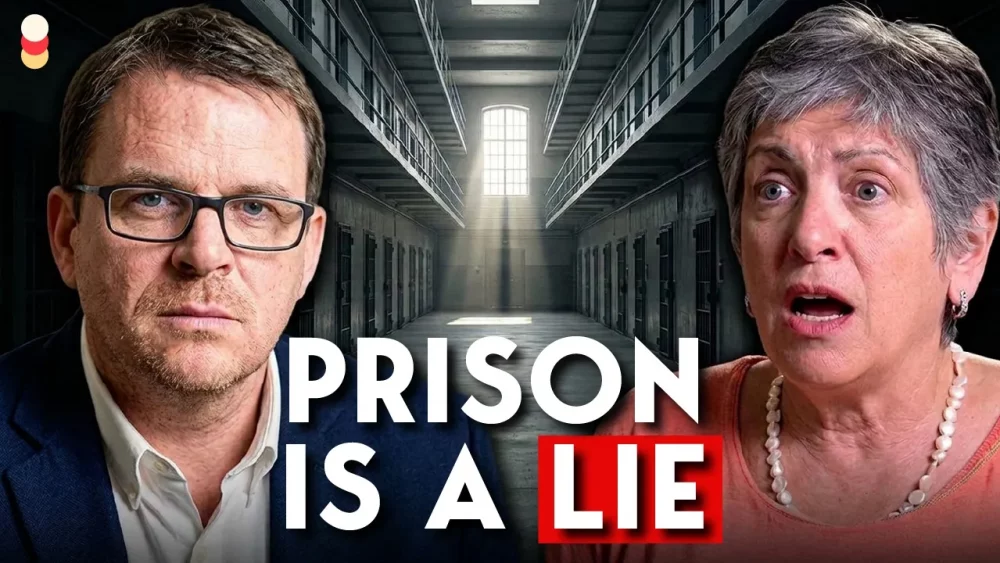
Some conversations stay with you long after they’ve ended. My discussion with Professor Paul Hamilton on All Things Conflict was one of them.
Paul, a Principal Lecturer in Criminology at Nottingham Trent University, has spent more than fifteen years researching the realities of our penal system. Together, we explored one of society’s biggest assumptions: that harsher punishment leads to better behaviour.
The evidence tells a very different story.
The Myth That Punishment Creates Better People
One of the most powerful insights Paul shared was that punishment, on its own, doesn’t reform behaviour. At best, it creates temporary compliance. It rarely addresses the circumstances, relationships or thinking that led someone into offending in the first place.
This resonated deeply with me. Throughout my work in conflict resolution, I’ve learned that people rarely change because they are shamed or isolated. Real change happens when people are supported to take responsibility, rebuild trust and reconnect with their capacity to contribute.
If we genuinely want safer communities, we have to stop confusing punishment with transformation.
Warehousing Human Beings
Modern prisons have increasingly become enormous containment facilities, sometimes holding as many as 2,500 people in one institution.
Paul describes these as “warehousing” prisons because they manage people rather than help them change. By isolating individuals from families, communities and meaningful relationships, these environments remove many of the conditions that support rehabilitation.
We often assume that locking people away solves the problem. In reality, we’re often postponing it until the day they return to society, and almost all of them do.
From “Risk” to “Change”
One of the ideas I found particularly compelling was Paul’s description of how the criminal justice system labels people primarily as carriers of risk rather than agents of change.
When every decision focuses on managing danger, people become defined by what they might do wrong instead of what they could become. The question shifts from “How do we control this person?” to “What conditions help this person make different choices?”
That is a profoundly different conversation.
Justice or Public Safety?
Paul also challenged something many of us rarely stop to examine: our obsession with “justice.”
Justice means different things to different people, which makes it easy to turn into a political slogan. Public safety, on the other hand, is something we can measure.
What if we organised our criminal justice system around reducing future harm instead of satisfying our desire for punishment?
That simple shift changes everything. Evidence becomes more important than emotion, and outcomes matter more than appearances.
Where Systems Fail Most
Another insight that stayed with me was Paul’s focus on transition points, when people enter prison and when they leave.
Without stable housing, mental health support, employment or community connections, many people leave custody facing the same challenges that contributed to their offending in the first place. If we fail to invest in those foundations, rehabilitation becomes little more than a hopeful slogan.
Learning from What Works
We also explored examples of systems doing things differently.
We discussed the decline of restorative justice programmes in the UK and looked at Norway, where prison officers are highly trained professionals whose role extends beyond security to supporting rehabilitation and reintegration.
It’s a fundamentally different philosophy. Instead of asking, “How do we punish?” they ask, “How do we prevent future harm?”
Listening to Lived Experience
I finished our conversation by asking Paul what single change he would make if he were handed the keys to the Ministry of Justice.
His answer was immediate: give people with lived experience of the criminal justice system genuine influence over policy.
Not token consultation.
Real structural power.
It’s an idea that resonates strongly with my own work. Lasting solutions are rarely designed for people; they’re designed with them.
A Different Future Is Possible
This conversation reminded me that conflict,. whether personal or societal, isn’t resolved through fear alone.
We can continue investing in harsher punishment, or we can invest in evidence, relationships and the conditions that genuinely reduce harm.
If our goal is safer communities, perhaps the most important question isn’t whether punishment feels satisfying.
It’s whether it actually works.
🎧 If you enjoyed this conversation, please subscribe to All Things Conflict wherever you listen to podcasts. And if you think others would find it valuable, we’d love it if you shared this episode with them.
If you like this blog or content please share it with others.