 Maria Arpa
This week…
The Masks We Wear
With..
Maria Arpa MBE
In this episode of All Things Conflict, I take a provocative look at the language we have become so accustomed to using around trauma, psychology and human behaviour. I want to question some of the assumptions that have become almost unquestionable in modern trauma informed practice.
I am not interested in simply repeating the familiar medical definitions of trauma. I want to go deeper.
What happens when we stop looking only at the person who has been harmed and start looking at the wounds carried by the people who hold power?
What happens when we ask why someone chooses a role that gives them authority to punish, control or enforce rules over other people?
These are uncomfortable questions, but I believe they are questions we need to ask.
The wounds underneath our reactions
We often talk about trauma responses as though they are fixed characteristics of a person.
Someone is labelled anxious. Someone else is avoidant. Another person is described as aggressive, controlling, narcissistic or difficult.
But what if we looked beneath the label?
An emotional response can be a wound responding to something that feels familiar. Until that wound is genuinely addressed, the same patterns can continue to surface again and again.
This changes the conversation.
Instead of asking, “What is wrong with this person?”, perhaps we should be asking, “What happened here, and what remains unresolved?”
The personality we construct
I find the idea of personality particularly fascinating.
We tend to speak about personality as though it is something permanent and inherent. This is simply who I am. This is my character. This is my personality.
But how much of that identity has been constructed to keep us safe?
The confident person may have learned never to show vulnerability.
The controlling person may have learned that uncertainty is dangerous.
The people pleaser may have discovered very early that keeping everyone else happy was the safest way to maintain connection.
The angry person may have found that anger was more protective than fear.
These behaviours can become so deeply embedded that eventually we mistake the armour for the person.
Our earliest understanding of love
One of the questions I explore is how early our understanding of love begins.
An infant has no sophisticated theory of relationships. Their earliest experiences of being held, touched, comforted, fed and responded to become part of their understanding of what connection feels like.
If that early experience is characterised by warmth and responsiveness, that may become familiar.
But what happens when the first experiences of connection involve neglect, rejection, coldness or inconsistency?
Could it be that a person later recognises those experiences as familiar and therefore mistakes familiarity for love?
This is one reason why people can find themselves repeatedly drawn into relationships that hurt them.
It is not necessarily because they consciously want to be abused.
It may be because their nervous system has learned that this is what connection looks like.
What about the people who enforce the system?
This is where I turn the conventional trauma lens upside down.
We spend a great deal of time examining the trauma experienced by the person who has been punished.
But what about the person doing the punishing?
What about the teacher who feels compelled to control?
The police officer who is drawn towards enforcement?
The judge who determines another person’s fate?
The corporate leader who thrives on authority?
What wounds might sit underneath the desire to occupy a position where one person has power over another?
We live within systems that normalise domination and authority. We rarely stop to ask whether these dynamics are actually healthy for human beings.
Perhaps we need to examine not only the wounds of those subjected to authority, but also the wounds of those who seek it.
When systems become part of the wound
Some of the most powerful lessons for me have come from working with people in real communities.
In this episode, I draw on stories from a frontline community project in West Virginia and what those experiences revealed about the criminal justice system.
There is something profoundly damaging about having your lived experience repeatedly denied.
When an institution tells you what happened to you, rather than genuinely listening to what you say happened, something very important is lost.
Witnessing becomes performance.
Truth becomes paperwork.
Human experience is reduced to legal language.
And the person at the centre of it all can be left feeling as though they are the problem for objecting to the story being told about them.
This is a form of systemic gaslighting.
It is not simply an individual psychological problem. The environment itself can continually reinforce the wound.
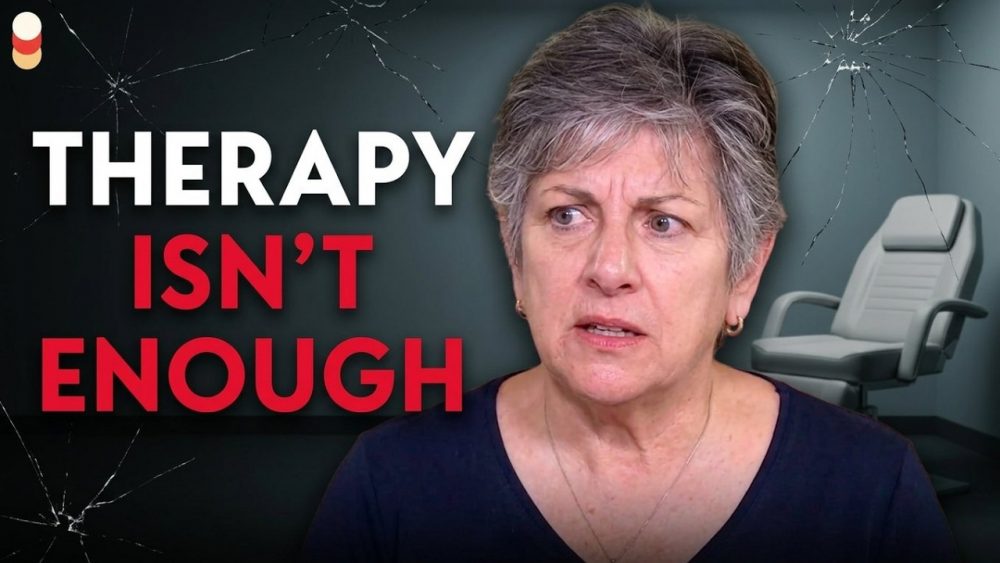
Can individual healing ever be enough?
We have become increasingly interested in therapies and techniques designed to help people process trauma.
There is value in many different approaches, but I think we need to ask a much bigger question.
What happens when someone does the therapeutic work, but then returns to an environment that continually reopens the same wound?
We cannot always separate individual healing from the systems in which people live.
You can teach someone to regulate their nervous system, but what happens when they return to a punitive workplace?
You can help someone process painful memories, but what happens when the institution they depend upon continues to invalidate their experience?
You can work on the individual, but sometimes the environment needs to change too.
We need to widen the conversation
For me, this is not an argument against therapy or against understanding trauma.
It is an invitation to go further.
- We need to question the labels we place on people.
- We need to become curious about the wounds beneath behaviour.
- We need to examine the armour we call personality.
- We need to look at relationships and ask what we have learned to recognise as love.
- And perhaps most importantly, we need to look at power.
Who seeks authority?
Why?
What wounds might be driving that choice?
What happens to people when those wounds are given institutional power?
These questions take us beyond the individual and into the systems that shape our lives.
True healing cannot always happen in isolation from the environment that created, reinforced or continues to reopen the wound.
That is where the conversation becomes much more interesting.
And much more uncomfortable.
Which, in my experience, is often where the real work begins.
🎙️ Listen to the full episode of All Things Conflict and explore what lies beneath our personalities, our wounds and the roles we play.
If you like this blog or content please share it with others.